
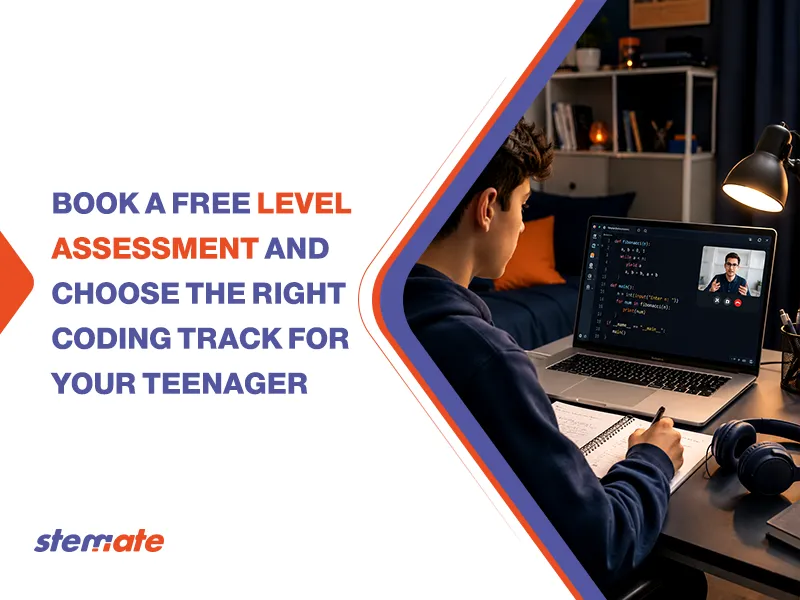
Online coding classes for high school students are educational programs designed to provide instruction in professional programming languages and computer science fundamentals through digital platforms. These courses focus on transitioning teenagers from basic digital literacy to advanced software development, preparing them for both university-level academics and the modern technical workforce.
What high school students learn in online coding classes
Students in these programs learn how to write clean, efficient code using professional syntax while mastering the logical structures required to build complex software. These virtual coding lessons go beyond simple commands to teach the underlying principles of how computer systems process data and interact with users.
- Mastery of Professional Languages: Students move away from block-based tools to learn Python classes for high school students or JavaScript courses for teens. These are the same tools used by professional engineers at global technology companies.
- Algorithmic Thinking: This involves learning how to break a large, complicated problem into a sequence of logical steps that a computer can execute. This is a core part of programming skills for university preparation.
- Data Structures: Students learn how to organize and store data effectively, using concepts like lists, arrays, dictionaries, and trees. Understanding data is essential for fields like artificial intelligence and data science.
Online coding classes for high school students: Best coding tracks for grades 9–12
The best coding tracks for high schoolers are divided into specialized paths—such as web development, data science, and game design—to allow students to focus on areas that match their career interests. These online STEM courses for teenagers are structured to provide a clear progression from foundational logic to specialized technical mastery.
1- Web Development Track:
This path focuses on building and maintaining websites. Students learn HTML and CSS for design, followed by JavaScript courses for teens to add interactivity. By the end of this track, they can build fully functional, responsive websites from scratch.
2- Data Science and AI Track:
Utilizing Python classes for high school students, this track teaches how to analyze large sets of information and build predictive models. This is highly relevant for students interested in economics, medicine, or environmental science.
3- Mobile App Development:
Students learn how to create applications for smartphones. This often involves learning languages like Swift for iOS or Kotlin for Android, focusing on user interface design and mobile-specific logic.
4- Game Programming Track:
Many students start with Programming for 12 year olds in environments like Roblox (using Lua) and progress to using C# with professional engines like Unity. This track teaches complex 3D physics and real-time logic.
5- Cybersecurity Path:
This specialized track teaches students how to protect networks and data. It covers the basics of encryption, secure coding practices, and identifying vulnerabilities in software systems.
Live classes, projects, and mentor support
High-quality programs prioritize live coding classes for teenagers because real-time interaction with instructors ensures that students receive immediate feedback and stay engaged with difficult material. These coding classes with live instructors provide a structured environment that mimics a professional development team.
- Real-Time Interaction: Unlike pre-recorded videos, live classes allow students to ask questions the moment they get stuck. This prevents the frustration that often leads students to quit self-paced courses.
- Project-Based Learning: These are project-based coding courses where every theoretical lesson is followed by a practical assignment. Students might build a calculator, a weather app, or a personal blog to demonstrate their understanding.
- Personalized Mentorship: Small class sizes allow instructors to provide individual guidance. Mentors help students navigate technical hurdles and offer advice on how to improve their coding style and logic.
- Peer Collaboration: Live sessions often include group projects where students must work together, mirroring the collaborative nature of the tech industry. This builds communication and teamwork skills.
- Structured Accountability: Having a set time for a live class helps students maintain a consistent learning schedule, which is essential for mastering a complex skill like programming.
How to choose the right course level
Choosing the correct level involves assessing the student’s current logical foundation, their typing accuracy, and whether they have previously completed Coding classes for kids. A proper assessment ensures the student is challenged enough to grow without feeling overwhelmed by the technical demands of the curriculum.
- Beginner Level: This is for students with no prior experience. These beginner programming classes online focus on basic logic, variables, and loops using a highly readable language like Python.
- Intermediate Level: For students who have finished basic courses or moved up. They start focusing on more complex topics like functions, classes, and basic web structures.
- Advanced Level: This level is for students who already understand core programming concepts and want to specialize. It involves deep dives into professional frameworks, database management, and complex algorithm design.
- Math and Logic Readiness: Parents should consider their child’s comfort with algebra. While you don’t need to be a math expert to code, understanding variables and functions in math makes learning the same concepts in code much easier.
- Project Goals: Consider what the student wants to build. If they want to create games, an intermediate C# course might be better than a beginner Python course, provided they have the logical foundation.
Certificates and portfolio outcomes
The primary outcome of these courses is a coding certification for high school students and a professional digital portfolio that documents their technical journey. These results provide concrete evidence of a student’s skills, which is highly valuable for university applications and future internships.
- Verified Certification: A certificate proves that a student has successfully completed a rigorous curriculum and met specific technical standards. It acts as a formal credential that can be added to a resume or LinkedIn profile.
- Digital Portfolio (GitHub): Students are encouraged to host their code on platforms like GitHub. A strong portfolio shows prospective universities that the student can take an idea from a concept to a finished, working piece of software.
- University Preparation: Having a portfolio of technical projects sets a student apart in the competitive admissions process. It demonstrates initiative, technical ability, and a commitment to independent learning.
FAQ
Are online coding classes suitable for Egyptian Thanaweya Amma students with limited weekly time?
Yes, most programs are designed with the Egyptian academic schedule in mind. They usually offer sessions on weekends or in the evenings, requiring only 2 to 4 hours of commitment per week. This allows students to build technical skills without interfering with their school studies.
Are classes taught in Arabic, English, or both for high school students in Egypt?
Classes at Stemate are often delivered in a bilingual format. While the coding syntax and technical terms are always in English (as they are in the industry), the instructors explain the complex logic and concepts in Arabic to ensure every student fully understands the material.
What laptop and internet speed are required for live coding classes?
A standard laptop with at least 8GB of RAM and an i3 processor (or equivalent) is sufficient for most beginner and intermediate tracks. For the internet, a stable connection of at least 5-10 Mbps is required to participate in live video sessions and run cloud-based coding environments smoothly.
Does the course produce projects or a certificate that can support university applications?
Every student completes a capstone project that is added to their digital portfolio. Upon successful completion, they receive a certificate that validates their skills. These outcomes are excellent for strengthening university applications, especially for computer science or engineering programs in Egypt or abroad.